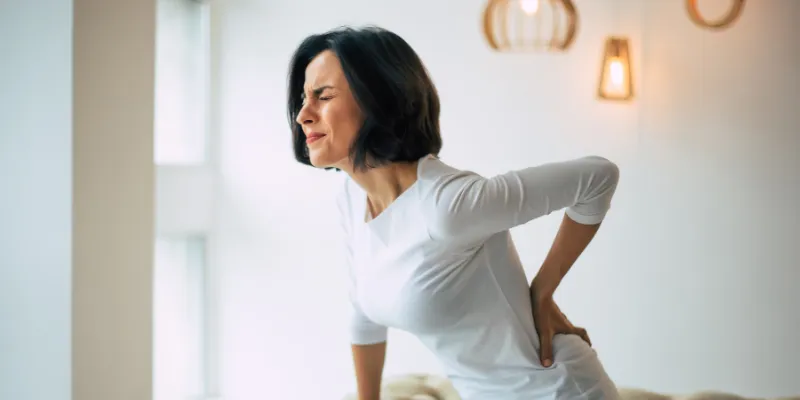
[NM1] Healing from back pain
Healing from back pain-never underestimate the healing power of hope
This story is about a 31-year-old woman I met a year ago, just on a Friday, as the clinic was closing for the weekend.
She was one of my early afternoon patients, and I thought she had already left. At the end of the day, she was seeing our counselor, and I received an urgent alert.
This was the first time she admitted to anyone that she could not go home.
All the women's shelters were full.
She had no friends who could take her in.
She didn't have her medications with her, and her father was waiting in the parking lot.
It was the first time, ever, that I physically drove a patient directly to the hospital for their safety.
Here’s her story.
Since 18 years old, she has been unable to work after an injury at her workplace.
Over those decades, her neck pain, back pain, and headaches didn't improved by the typical therapies offered like physiotherapy and medications. She developed depression and had so little mobility that she required a walking cane. Ultimately, at some point, she was given strong opioids only and told that she had to ‘live with this’.
She never received coordinated care for the body, brain, and context of her work injury.
She was solely dependent on her family of origin. She was called lazy, pushed to do things that caused hurt, and not believed.
When I met her, I had to start fresh, looking at her various problems with the layered care in mind.
In another blog, I'll talk through what the layered care lens means for neck and back pain, but suffice it to say that with our team, she went through a combination of advanced pain procedures and virtual neuroscience-based group medical visits that are covered in BC under Medical Services Plan. This was enough to dampen the pain intensity so she can progress with her exercise. She did not have any financial resources so these were a lifeline for her as she put her life together.
In reflection, I believe the healing all started with the words. On that Friday, she bravely broke the cycle by letting us know the darkness of her situation and by following through with immediate action together, the healing began. The path to start all over again was unknown, scary, and not without barriers.
In this last year, the combination of the layered medical therapies, new psychological and emotional peace, her hard work of rehabilitation, and applying the basic principles of health, such as nutrition, sleep, food, and movement, made major progress.
She went back to school, for which she received grants. She found newly built subsidized housing, which she called home. She reconnected with healthy friendships. People commented that she stood taller, walked faster, and looked different. She worked on her mind, focusing on solutions.
She is now well on her way to starting her new career next year, and she is excited.
The foundation of this story was when she met a team that wouldn't give up on her; that was all that she needed to find the inner strength to fight for herself and start to heal.
Key Learnings:
This story underpins just how much a provider's strength of belief is equally as healing as the medications or procedure in changing pain.
The greatest healer is from within you; find the way to tap into it.
The holistic approach to healing is foundational for all health
Rehabilitation
Improving nutrition
Addressing sleep
Increasing movement
Key Learnings:
This story reveals profound truths about healing:
A provider’s belief is as healing as any medication or procedure. Patients feel that when someone refuses to give up on them, it can be the turning point.
The greatest healer comes from within. External support is vital, but lasting change happens when patients rediscover their own strength.
Holistic, layered care is foundational. True healing weaves together rehabilitation, nutrition, sleep, movement, emotional safety, and community.
Takeaways for Patients & Clinicians
Speak the truth, even if it feels impossible. Asking for help is the first crack in the cycle of suffering.
Look beyond symptoms. Chronic pain requires a whole-person approach: body, brain, and context.
Don’t underestimate belief. Clinicians’ conviction that healing is possible can spark a patient’s fight for themselves.
Brenda’s Path Forward Reflection
Women’s health—and pain care more broadly—cannot be reduced to body parts or prescriptions. Healing happens when we address the whole person, and when providers stand shoulder-to-shoulder with patients in their darkest moments.
We must build systems that make this kind of layered care the rule, not the exception.
"Because one Friday at closing time should not be the only chance a woman has to be heard, believed, and kept safe.” Dr. Brenda Lau


